
*This content was translated by AI.
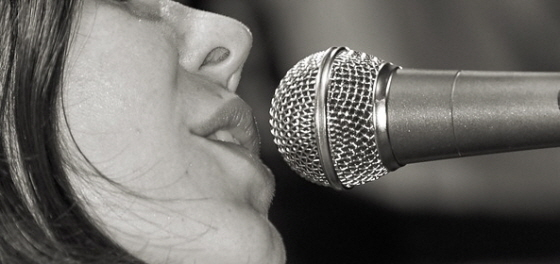
Among musicians, there is one area where only vocals are handled directly. It's pronunciation. There are lyrics in a song, and lyrics are language. So the vocal's pronunciation goes beyond simple accuracy and touches on how the song talks to a person.
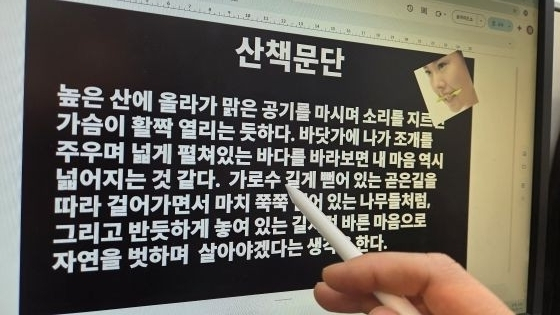
There is an old conventional wisdom about pronunciation. It means you have to pronounce it clearly. This is only half right. Accuracy of pronunciation is definitely a basic skill. However, if you evaluate pronunciation with just one accuracy, you will miss out on something more important in the song. Because pronunciation is a way of communicating after all.
Even in our daily lives, we change the tone of our speech to suit the situation. When you talk to yourself, keep your pronunciation low, and if you need to convey something clearly to someone, you will naturally become clear. Uncertain words blur the end, and when I want to carry out my will, I accent it strongly. Even in the same sentence, the form of sound varies depending on who you speak to and under what circumstances you speak to. It is so natural that we are hardly aware of it.
However, the natural sense often disappears in the song. This is because the correct pronunciation becomes the correct answer. Students focus on the idea of pronunciation. So I try to pronounce consonants and vowels clearly. It's certainly not wrong. But strangely, there are moments when the song doesn't sound like it sounds. This is because the sound is accurate, but the speaker's intention or emotion is not well felt.
I often see scenes like this even during lessons. The student sings with the correct pronunciation. But I can't feel what I want to say with this song. I can't see what the situation is or how I'm saying it.
So I ask the student.
"Who is this song talking to?"
"What kind of situation are you talking about?"
The moment you feel the intention of the question, the student's song begins to change little by little. You can see the emotions of the singer, you can see the other person, and you start to see why you need the words. Even the same lyrics change the way they speak. This is because pronunciation is not made only by the movement of the tongue, but is determined by the way you talk.
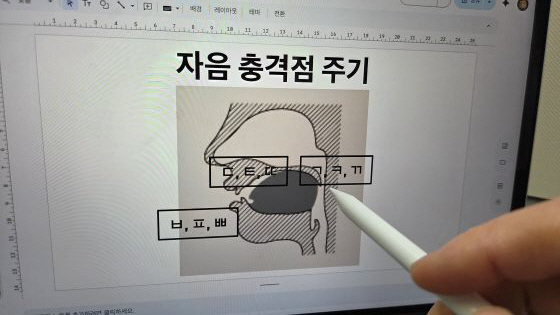
One thing is clear here. Blurring pronunciation is possible without special training. However, communicating pronunciation clearly requires training. The ability to accurately position the impact point of the consonant and the vowel tongue and to pronounce it within the rhythm is made by repetitive practice. So, the better the singer, the more accurate the basic pronunciation.
On top of it, some words are spoken clearly, some are solved naturally, and some ends are chosen to let go. The choice of pronunciation makes the emotion and attitude of the song. After all, a good singer is a singer who knows how to choose the intensity and style of pronunciation according to the situation of the song. This is because singing is not a technique for making sound, but an act of talking to someone.
<© STARNEWS. All rights reserved. No reproduction or redistribution allowed.>
*This content was translated by AI.


![I did it like Korea' Canada advances to the 2R for the first time in history as No. 1 in Group A! Cuba's first 1R elimination shock [2026 WBC]](https://image.starnewskorea.com/cdn-cgi/image/f=webp,w=1200,h=800,fit=cover,g=face/21/2026/03/2026031207215662074_1.jpg)


